Search

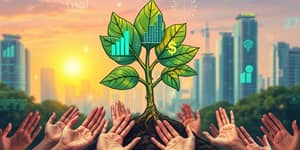
Imagine a world where every building not only shelters but also uplifts, where real estate becomes a force for positive social change that resonates through communities.
This vision is at the heart of social impact real estate, a movement redefining how we develop and manage properties.
It prioritizes community well-being and environmental sustainability while still delivering solid financial returns, making it a powerful tool for transformation.
Social impact real estate involves developing, managing, and investing in properties that generate positive effects on communities.
It goes beyond traditional models by embedding ESG criteria, especially focusing on the social aspect, to ensure holistic benefits.
This approach shapes communities through thoughtful design elements like green spaces and mixed-use developments.
These features can boost livability by up to 25% and enhance property values, proving that good design pays off.
By integrating social goals, it addresses critical issues such as affordability, inclusivity, and health from the ground up.
To achieve meaningful change, developers and investors can adopt several proven strategies.
Here are some core approaches that drive success in social impact real estate:
Each strategy requires commitment and collaboration to create lasting effects.
For instance, community engagement ensures that projects reflect local voices and priorities, preventing past errors like ignored consultations.
Learning from real examples can inspire and guide future projects.
The following table highlights key social impact real estate initiatives and their outcomes:
These cases demonstrate how innovative design and stakeholder collaboration yield measurable benefits.
They show that social impact real estate is scalable and adaptable across different regions.
Effective impact measurement is crucial for demonstrating value and improving outcomes.
It involves balancing quantitative data with qualitative insights to capture the full picture.
Here are key metrics and frameworks to track success:
Robust impact measurement management (IMM) is foundational and must be stakeholder-driven.
By focusing on both data and stories, projects can achieve credible and meaningful assessments that guide future efforts.
Social impact real estate offers a wide range of advantages that extend beyond financial returns.
These benefits make it an attractive option for investors and communities alike.
Together, these benefits create a virtuous cycle of community enhancement that supports long-term viability.
For example, lower risk profiles with inflation-linked income make investments more resilient.
Despite its potential, social impact real estate faces obstacles that require careful management.
Addressing these challenges head-on can lead to more successful and sustainable projects.
By acknowledging these hurdles, stakeholders can develop adaptive and resilient strategies that mitigate risks.
For instance, involving communities early prevents missteps and builds trust over time.
For those inspired to embark on social impact real estate, here are actionable steps to begin.
This list provides a roadmap for integrating impact into real estate practices.
These steps help translate vision into reality, creating projects that foster inclusive and thriving communities.
By taking a proactive approach, investors can drive meaningful change while achieving financial goals.
Social impact real estate represents a paradigm shift towards more responsible and regenerative development.
It challenges us to think beyond profit and embrace our role in shaping societies.
Through collaborative efforts and innovative strategies, we can transform properties into beacons of hope and opportunity.
Every project has the potential to leave a lasting legacy, improving lives and strengthening communities.
As we move forward, let this be a call to action: to build not just structures, but futures where everyone belongs.
Together, we can create a world where real estate truly serves the greater good, one community at a time.
References