Search
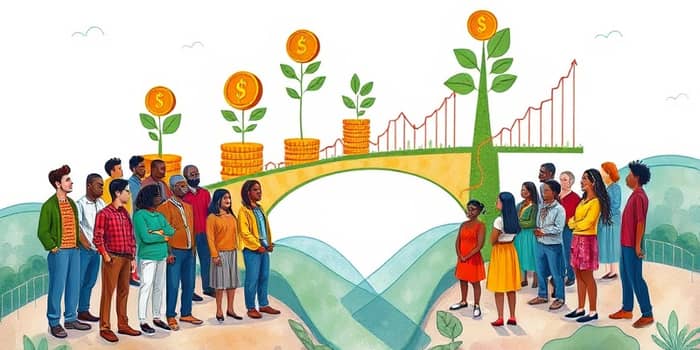
Imagine a world where everyone, regardless of background, has the chance to build wealth and shape their financial future.
This vision is at the heart of democratizing finance, a movement gaining momentum as technology and policy evolve.
It's about breaking down barriers that have long kept investment opportunities out of reach for the average person.
In recent years, the conversation has shifted from exclusive wealth accumulation to inclusive growth.
By opening social investing to all, we can foster economic resilience and reduce inequality.
This article explores what democratizing finance means, why it matters, and how you can participate.
We'll delve into practical tools, regulatory changes, and the benefits and risks involved.
Our goal is to inspire and equip you with knowledge to take control of your financial destiny.
Democratizing finance is more than just a buzzword; it's a transformative idea.
At its essence, it means expanding access to investment opportunities beyond the wealthy elite.
This concept gained prominence after the Great Recession, as thinkers like Robert Shiller advocated for financial inclusion.
It encompasses multiple dimensions, from credit access to democratic control over financial institutions.
Historically, investments like venture capital were reserved for a select few, contributing to wealth gaps.
Now, with new approaches, we're seeing a shift toward broader participation.
This movement aims to ensure that economic growth benefits everyone, not just a privileged minority.
By making finance more accessible, we can create a fairer and more prosperous society.
Several pressing issues drive the need for democratization.
The wealth gap has widened, with many excluded from meaningful wealth creation pathways.
Limited access to investment vehicles and financial literacy barriers persist.
Systemic problems in finance capitalism, such as instability and ecological harm, also call for change.
Most credit allocation decisions are made privately, without public input.
Democratizing finance seeks to address these by involving more people in financial processes.
It's about turning passive observers into active participants in the economy.
Recent regulatory changes are making democratization possible.
The SEC's triple mandate provides a framework for safety, fairness, and investor protection.
Key reforms include refining the accredited investor definition to focus on knowledge, not just wealth.
These changes help smaller companies reach more investors and lower entry barriers.
By balancing risk with education, regulations aim to protect while enabling participation.
This regulatory evolution is crucial for building trust and expanding market access.
Various tools and approaches are driving this change.
Technology plays a pivotal role, with fintech leading the charge.
Policy solutions, like public banking models, involve democratic processes in financial decisions.
Universal investment programs propose giving every citizen funds to invest.
Education and financial literacy are enablers, with certification programs helping investors manage risk.
However, education alone cannot eliminate investment risks, so thoughtful disclosure is key.
Democratizing finance offers numerous advantages that can transform lives.
It enables broader wealth creation for individuals and future generations.
By connecting more investors with opportunities, it fuels economic growth and innovation.
Simplified access through tools like fractional ownership makes investing less daunting.
When people invest, they become more aware of their economic responsibilities.
This can lead to a more stable and equitable society overall.
While promising, democratization comes with risks that must be managed.
Investment risk is inherent, especially in early-stage companies.
Decentralized approaches may incentivize returns over public goods.
Behavioral issues, like lack of personalized advice, can arise.
It's crucial to balance access with protection through education and regulation.
By understanding these challenges, investors can make safer choices.
Some advocate for decentralized finance using blockchain technology.
Critics argue this doesn't address the need for collective decision-making.
True democratization might involve greater democratic control over financial institutions.
This could shift focus from profit to nonprofit structures.
Cross-sector applications, like in retirement security, show its broad potential.
Tokenization could democratize energy and infrastructure projects.
The future holds promise for more inclusive financial ecosystems.
You can start participating in democratized finance today.
First, educate yourself on basic investing principles and risks.
Explore fintech platforms that offer low-cost investment options.
Consider starting small to build confidence and diversify your portfolio.
Stay informed about regulatory changes that might affect your investments.
Engage with community initiatives that promote financial inclusion.
By taking these steps, you can contribute to and benefit from a more open financial system.
Remember, democratizing finance is about empowering everyone to have a stake in the economy.
It's a journey toward fairness, opportunity, and shared prosperity.
References