Search
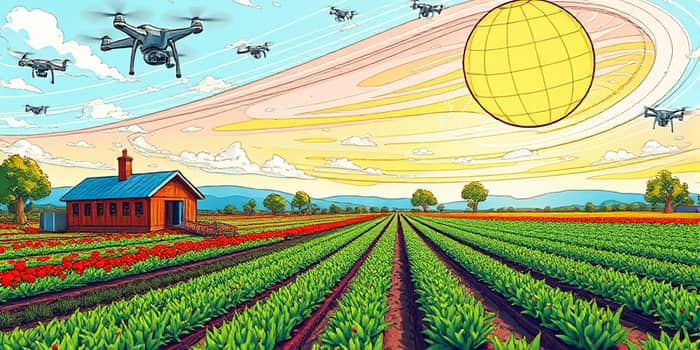
The journey toward global food security is paved with uncertainty, yet it is illuminated by groundbreaking trends that promise hope and practical solutions.
As populations grow and climate pressures mount, understanding these dynamics becomes not just insightful but essential for producers, investors, and consumers alike.
Stagflation into 2026 casts a shadow over global agroindustry, with overproduction and flat demand creating a tense economic landscape.
This volatility threatens margins, but it also sparks a push for smarter, more sustainable practices.
From technological leaps to regional shifts, the agricultural sector is evolving rapidly, and staying ahead requires a keen eye on emerging patterns.
Market instability is a defining feature of modern agriculture, driven by complex global forces.
Overproduction in grains and vegetables, coupled with high inventories, challenges profitability across the board.
Demand remains sluggish due to factors like aging populations and health-focused policies, such as those promoting wellness.
Commodity prices, like U.S. corn at around $4.10 per bushel, see minor fluctuations, but tight margins persist for many farmers.
Input costs are rising, influenced by tariffs and inflation, though subsidies in regions like the U.S. provide some buffer.
Labor shortages further complicate operations, accelerating the adoption of automation technologies.
The global agriculture market is projected to grow from $12,974 billion in 2025 to $13,844 billion in 2026, indicating resilience amid challenges.
Key risks include supply chain disruptions from trade policies and geopolitical tensions.
Volatility from trade tariffs can trigger domino effects, making it crucial to monitor global political shifts.
For instance, U.S. policies might impact exports, while China's economic challenges ripple through pesticide markets.
Staying informed and adaptable is the first step toward navigating this turbulent environment.
Different regions face unique pressures, influencing global food supply and security.
In China, economic struggles are eroding margins in sectors like pesticides, while massive industrial capacity requires reinvestment.
South America presents a mixed picture, with Brazil grappling with high inflation and defaults, and Argentina showing potential for revival through supportive leadership.
The U.S. benefits from stable energy prices, aiding agricultural operations, while the EU adapts with alternative energy sources like nuclear.
Wheat production highlights regional strengths, with Argentina hitting record levels and Russia maintaining high outputs.
Coarse grains and soybeans also see production increases, particularly in Brazil, which boosts global supplies.
Global wheat stocks are rising, offering a buffer against shortages, but regional disparities mean that some areas remain vulnerable.
Regional production boosts like Argentina's wheat surge are critical for balancing global food inventories.
Understanding these dynamics helps stakeholders anticipate shifts and plan accordingly, whether for investment or production.
Technology is revolutionizing agriculture, offering tools to enhance efficiency and sustainability.
From AI to regenerative practices, innovations are transforming how we grow food and manage resources.
These trends not only improve yields but also address long-term food security challenges.
Investment is flowing into sustainable tech, with venture capital focusing on areas like traceability and climate-smart solutions.
Bioengineering, including genomically edited crops, is emerging as a top trend for developing adaptive varieties.
However, challenges such as small farm adoption rates and data biases must be addressed to ensure equitable access.
Technological adoption rates are accelerating, with over 60% of large farms expected to use AI by 2026.
This rapid integration offers practical tools for farmers to optimize inputs and reduce environmental impact.
Food security is under pressure from population growth, climate change, and resource scarcity.
One-quarter of global crops face water stress, highlighting the urgency for efficient practices.
Contamination risks and supply chain vulnerabilities further threaten stable food supplies.
On the positive side, technology is enhancing productivity, with innovations like predictive agriculture from companies such as John Deere.
Biofuels are creating new market segments, while consolidation offers economies of scale for larger operations.
Actionable insights include focusing on automation and exploring new customer bases in emerging sectors.
Monitoring economic indicators, like U.S. GDP trends and Brazil's recovery, is vital for strategic planning.
Resource efficiency innovations such as indoor farming are key to addressing water scarcity issues.
By leveraging these tools, stakeholders can build more resilient food systems that withstand future shocks.
To thrive in this evolving landscape, concrete steps are necessary for all involved in agriculture.
Producers should prioritize integrating technology packages, such as precision platforms that combine AI and data analytics.
Adopting biologicals can enhance crop resilience, reducing reliance on synthetic inputs and improving sustainability.
Investors can focus on capital flows toward sustainable and tech-driven ventures, including traceability and climate-smart solutions.
Consumers play a role by supporting clean labels and non-GMO products, driving demand for transparent supply chains.
Risks like cybercrime and trade escalations require vigilance, with plans to safeguard operations and diversify markets.
Educational efforts are needed to boost small farm adoption of new technologies, ensuring inclusive growth.
Actionable tech integration is the cornerstone of modern agricultural success, from farm to table.
By embracing these strategies, we can move toward a future where food security is not just a goal but a reality, fueled by innovation and collective effort.
References