Search
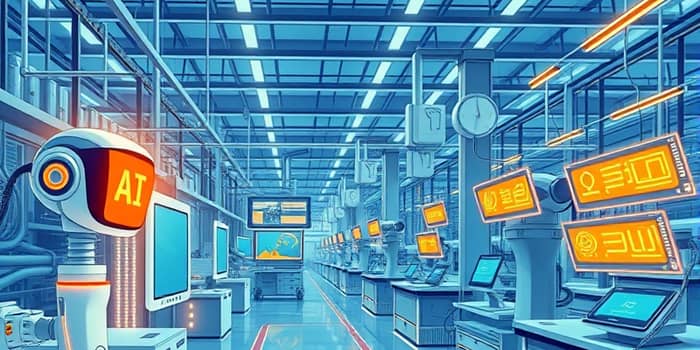
As we approach 2026, the manufacturing sector stands at the brink of a revolution, powered by the rapid maturation of Industry 4.0 technologies.
This digital leap is transforming factories into dynamic hubs of innovation and efficiency.
Companies worldwide are moving from pilot projects to operational standards, driven by the need for agility and resilience in an uncertain global landscape.
This evolution promises not just enhanced productivity but a fundamental shift in how we think about production and human ingenuity.
Artificial Intelligence is no longer a futuristic concept but a core component of modern manufacturing.
It enables real-time optimization and autonomous decision-making on the shop floor.
Key applications include predictive maintenance, which significantly reduces unplanned downtime.
For instance, AI systems can forecast equipment failures before they occur.
This leads to substantial cost savings and smoother operations.
These advancements are backed by projections that show widespread adoption by mid-2020s.
Executives are allocating over 20% of their budgets to smart initiatives, highlighting its critical role.
The adoption of smart factories is accelerating, with 72% of firms now implementing Industry 4.0 solutions.
This marks a dramatic increase from just 25% in 2019, signaling a shift towards digital maturity.
Technologies such as IoT, cloud computing, and data analytics are becoming standard.
These tools enable seamless connectivity and data-driven insights across operations.
Productivity gains are significant, with output increases of 10-20% and employee productivity boosts of 7-20%.
The U.S. market is projected to grow from USD 21.4 billion in 2025 to USD 50.8 billion by 2033.
Global uncertainties, including tariffs and geopolitical tensions, are pushing manufacturers to rethink their supply chains.
Reshoring and nearshoring are becoming strategic priorities to enhance resilience.
Digital technologies enable dynamic, self-adapting networks that can respond in real-time.
This includes advanced forecasting and autonomous inventory management systems.
These approaches help companies navigate volatility and maintain steady production flows.
The focus is on creating agile ecosystems that can withstand disruptions.
The manufacturing workforce is evolving, with a growing emphasis on tech-enabled craftsmanship.
Traditional roles are blending with IT skills, creating hybrid positions that demand new competencies.
Training programs in robotics, data analysis, and AI are essential for upskilling employees.
Human-robot collaboration is enhancing safety and efficiency on the factory floor.
This shift not only addresses labor shortages but also empowers workers to thrive in a digital environment.
Companies that invest in their people gain a competitive edge in innovation.
Sustainability is now integral to manufacturing operations, driven by environmental, social, and governance (ESG) goals.
Digital tools play a key role in reducing energy consumption and minimizing waste.
For example, AI can optimize energy usage across facilities, leading to significant savings.
This aligns with global efforts to combat climate change and promote responsible production.
These initiatives not only benefit the planet but also improve operational efficiency and cost-effectiveness.
Manufacturers are recognizing that sustainability is a driver of long-term success.
Effective data management is the backbone of digital transformation in manufacturing.
Unified data models and real-time streaming enable better decision-making and innovation.
Operational technology (OT) security is crucial to protect against cyber threats in connected environments.
Digital twins provide virtual replicas of physical assets for remote monitoring and optimization.
These strategies help manufacturers harness the full potential of their data while mitigating risks.
The goal is to create intelligent, responsive systems that enhance overall performance.
The journey towards manufacturing's digital leap is filled with opportunities and challenges.
By embracing these trends, companies can unlock unprecedented levels of efficiency and innovation.
The future belongs to those who dare to transform, blending technology with human creativity.
Let this be an inspiration to all in the industry to step forward into a brighter, more resilient era.
References