Search
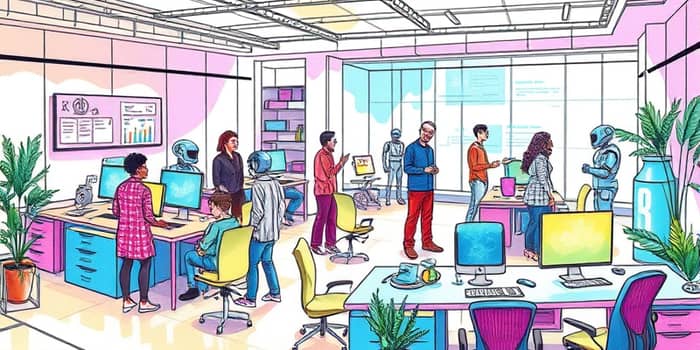
The world of work stands on the brink of a profound revolution, where technology and humanity converge to redefine productivity and purpose.
This shift is not merely about adopting new tools; it's about reimagining the very architecture of labor to foster innovation and resilience.
As we navigate this change, understanding key trends can empower you to seize opportunities and overcome challenges with confidence.
From AI-driven automation to the resurgence of human skills, the future promises a dynamic blend of efficiency and empathy.
By anticipating these shifts, individuals and organizations can position themselves for success in a rapidly evolving market.
Artificial intelligence is evolving from a supportive tool into an autonomous partner, reshaping how work gets done.
Agentic AI systems are becoming integral teammates, managing end-to-end tasks with minimal human oversight.
This transformation requires robust governance to ensure ethical use and accountability in decision-making processes.
Organizations must invest in upskilling to bridge gaps, as only 54% of workers used AI last year.
Daily users report higher productivity and security, emphasizing the value of hands-on experience with new technologies.
The traditional job structure is giving way to a more fluid, skills-based approach that prioritizes agility and outcomes.
Wholesale redesign breaks roles into tasks assigned to humans or AI, with skills data driving deployment decisions.
This shift fosters a flattening of hierarchies, reducing managerial roles by 6% globally in three years.
Leaders must champion this redesign to unlock potential and foster a culture of innovation and collaboration.
Hybrid work models are evolving into personalized experiences that balance flexibility with human connection.
Offices are transforming into destinations for creativity, with wellbeing and empathy-led cultures driving engagement.
Gallup reports that only 21% of employees globally are engaged, underscoring the need for strategic focus on morale.
Community spaces over traditional cubicles foster interaction, making the workplace a hub for innovation and support.
Technology infrastructure is enabling real-time, low-friction operations across industries, particularly in supply chains and manufacturing.
Digital twins and robotics create virtual simulations for risk-free testing and scalable automation solutions.
Edge computing processes data locally for faster decisions, enhancing maintenance and operational efficiency.
Embracing these tools can provide a competitive edge, but requires investment in skills and infrastructure.
As technology amplifies human elements, soft skills and empathetic leadership become critical for navigating disruptions.
Demand for soft skills is projected to rise by 26% by 2030, with analytical and creative thinking at the core of success.
Reskilling is a strategic imperative, with 89% of HR functions undergoing or planning restructuring to support this shift.
Investing in people ensures that technological advancements are leveraged ethically and effectively for long-term success.
To thrive in this new era, embrace a mindset of lifelong learning and adaptability.
Start by assessing your skills and identifying gaps that align with emerging trends in your industry.
Organizations should foster cultures that value innovation, wellbeing, and inclusive leadership.
By balancing technology with humanity, we can build a future of work that is not only efficient but also fulfilling and equitable for all.
References